




Search
Related News
- 00
0000-00
ETFE Cost per Square Meter: What's Included in an Installed Roof Price? - 00
0000-00
How oxygen levels affect PPS filter media in thermal power plants - 00
0000-00
How industrial textile supply chain mapping reveals UD fabric bottlenecks - 00
0000-00
Are carbon fiber reinforcement rolls suited to wind blade spar caps? - 00
0000-00
When do hot gas filter bags need PTFE instead of PPS?
Tags
How Buyers Can Procure HDPE Smooth Geomembrane for Lining Projects




Industrial sourcing works best when the buyer connects product selection with real operating conditions. For landfill contractors, pond lining buyers, mining project teams, wastewater engineers, and geosynthetic distributors, HDPE Smooth Geomembrane should be evaluated through application, inspection, delivery, storage, and after-arrival workflow. A catalog page can confirm the category, but the purchase order must explain how the item will be formed, installed, protected, maintained, or resold.
This article gives procurement teams a practical framework for evaluating the product without relying on fabricated prices, unsupported statistics, or exaggerated claims. It focuses on fields that can be checked before shipment: specification clarity, supplier communication, document control, packaging, and receiving discipline. The goal is to make the buying decision easier to review and safer to repeat.
Define the Containment Function
Define the Containment Function is where a buyer turns a product name into a practical specification. For landfill contractors, pond lining buyers, mining project teams, wastewater engineers, and geosynthetic distributors, the material or component is usually tied to pond liners, landfill cells, wastewater lagoons, mining containment, environmental protection, and seepage control projects. If the inquiry only lists a keyword and a target price, the supplier may not see the service condition, processing route, packing risk, or document requirement that determines whether the order works after arrival.
The main risk is wrong thickness, poor roll handling, welding mismatch, site puncture, UV exposure, and missing project documents. These issues are easier to prevent during quotation than to solve after shipment. A stronger request records the application, key technical fields, inspection expectations, label format, and packing method before the quotation is treated as final. This gives the buyer a fairer basis for comparing suppliers.
Buyers should treat thickness, surface type, welding plan, roll dimensions, site preparation, packing, and QC records as connected decisions. When one field changes, the team should review its effect on cost, lead time, receiving, processing, installation, and resale. This habit is especially useful for repeat orders because it prevents silent specification drift between batches and keeps communication factual.
Match Thickness to Site Risk
Match Thickness to Site Risk is where a buyer turns a product name into a practical specification. For landfill contractors, pond lining buyers, mining project teams, wastewater engineers, and geosynthetic distributors, the material or component is usually tied to pond liners, landfill cells, wastewater lagoons, mining containment, environmental protection, and seepage control projects. If the inquiry only lists a keyword and a target price, the supplier may not see the service condition, processing route, packing risk, or document requirement that determines whether the order works after arrival.
The main risk is wrong thickness, poor roll handling, welding mismatch, site puncture, UV exposure, and missing project documents. These issues are easier to prevent during quotation than to solve after shipment. A stronger request records the application, key technical fields, inspection expectations, label format, and packing method before the quotation is treated as final. This gives the buyer a fairer basis for comparing suppliers.
Buyers should treat thickness, surface type, welding plan, roll dimensions, site preparation, packing, and QC records as connected decisions. When one field changes, the team should review its effect on cost, lead time, receiving, processing, installation, and resale. This habit is especially useful for repeat orders because it prevents silent specification drift between batches and keeps communication factual.
Plan Welding and Overlap Early
Plan Welding and Overlap Early is where a buyer turns a product name into a practical specification. For landfill contractors, pond lining buyers, mining project teams, wastewater engineers, and geosynthetic distributors, the material or component is usually tied to pond liners, landfill cells, wastewater lagoons, mining containment, environmental protection, and seepage control projects. If the inquiry only lists a keyword and a target price, the supplier may not see the service condition, processing route, packing risk, or document requirement that determines whether the order works after arrival.
The main risk is wrong thickness, poor roll handling, welding mismatch, site puncture, UV exposure, and missing project documents. These issues are easier to prevent during quotation than to solve after shipment. A stronger request records the application, key technical fields, inspection expectations, label format, and packing method before the quotation is treated as final. This gives the buyer a fairer basis for comparing suppliers.
Buyers should treat thickness, surface type, welding plan, roll dimensions, site preparation, packing, and QC records as connected decisions. When one field changes, the team should review its effect on cost, lead time, receiving, processing, installation, and resale. This habit is especially useful for repeat orders because it prevents silent specification drift between batches and keeps communication factual.
Protect Rolls Before Installation
Protect Rolls Before Installation is where a buyer turns a product name into a practical specification. For landfill contractors, pond lining buyers, mining project teams, wastewater engineers, and geosynthetic distributors, the material or component is usually tied to pond liners, landfill cells, wastewater lagoons, mining containment, environmental protection, and seepage control projects. If the inquiry only lists a keyword and a target price, the supplier may not see the service condition, processing route, packing risk, or document requirement that determines whether the order works after arrival.
The main risk is wrong thickness, poor roll handling, welding mismatch, site puncture, UV exposure, and missing project documents. These issues are easier to prevent during quotation than to solve after shipment. A stronger request records the application, key technical fields, inspection expectations, label format, and packing method before the quotation is treated as final. This gives the buyer a fairer basis for comparing suppliers.
Buyers should treat thickness, surface type, welding plan, roll dimensions, site preparation, packing, and QC records as connected decisions. When one field changes, the team should review its effect on cost, lead time, receiving, processing, installation, and resale. This habit is especially useful for repeat orders because it prevents silent specification drift between batches and keeps communication factual.
Coordinate Geotextile Support Layers
Coordinate Geotextile Support Layers is where a buyer turns a product name into a practical specification. For landfill contractors, pond lining buyers, mining project teams, wastewater engineers, and geosynthetic distributors, the material or component is usually tied to pond liners, landfill cells, wastewater lagoons, mining containment, environmental protection, and seepage control projects. If the inquiry only lists a keyword and a target price, the supplier may not see the service condition, processing route, packing risk, or document requirement that determines whether the order works after arrival.
The main risk is wrong thickness, poor roll handling, welding mismatch, site puncture, UV exposure, and missing project documents. These issues are easier to prevent during quotation than to solve after shipment. A stronger request records the application, key technical fields, inspection expectations, label format, and packing method before the quotation is treated as final. This gives the buyer a fairer basis for comparing suppliers.
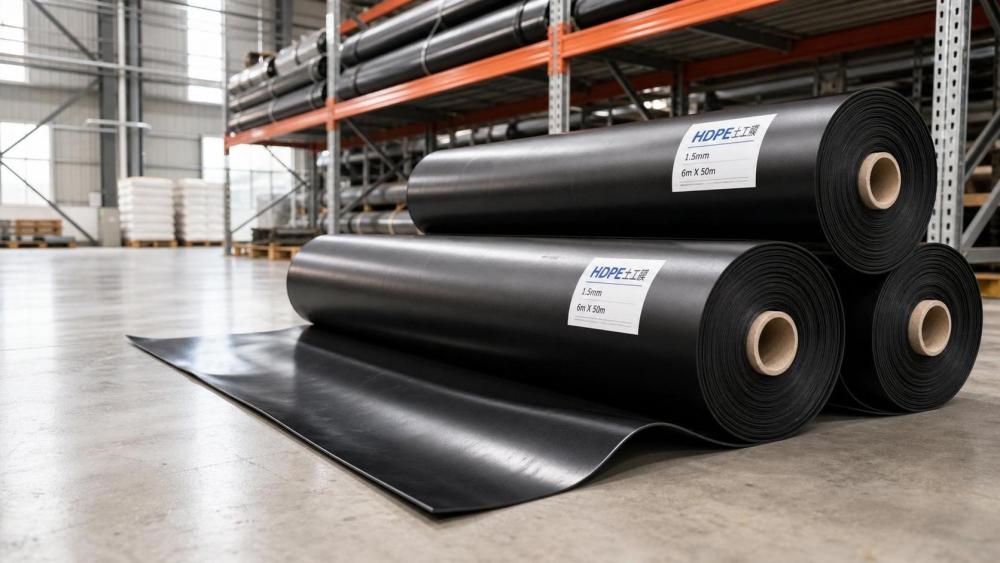
Buyers should treat thickness, surface type, welding plan, roll dimensions, site preparation, packing, and QC records as connected decisions. When one field changes, the team should review its effect on cost, lead time, receiving, processing, installation, and resale. This habit is especially useful for repeat orders because it prevents silent specification drift between batches and keeps communication factual.
Document Quality Before Delivery
Document Quality Before Delivery is where a buyer turns a product name into a practical specification. For landfill contractors, pond lining buyers, mining project teams, wastewater engineers, and geosynthetic distributors, the material or component is usually tied to pond liners, landfill cells, wastewater lagoons, mining containment, environmental protection, and seepage control projects. If the inquiry only lists a keyword and a target price, the supplier may not see the service condition, processing route, packing risk, or document requirement that determines whether the order works after arrival.
The main risk is wrong thickness, poor roll handling, welding mismatch, site puncture, UV exposure, and missing project documents. These issues are easier to prevent during quotation than to solve after shipment. A stronger request records the application, key technical fields, inspection expectations, label format, and packing method before the quotation is treated as final. This gives the buyer a fairer basis for comparing suppliers.
Buyers should treat thickness, surface type, welding plan, roll dimensions, site preparation, packing, and QC records as connected decisions. When one field changes, the team should review its effect on cost, lead time, receiving, processing, installation, and resale. This habit is especially useful for repeat orders because it prevents silent specification drift between batches and keeps communication factual.
Practical Buyer Evaluation Table
Pre-Order Checklist
- Define the final application, service environment, and receiving process before asking for a final quotation.
- Confirm the core specification fields in writing, including size, grade, surface, model, coating, packaging, or structure as relevant.
- Ask which assumptions are included in the quotation and which items require separate confirmation.
- Request drawings, labels, inspection records, packing photos, or sample output when the order has project or resale risk.
- Plan unloading, storage, installation, and internal handling before the shipment arrives.
- Keep a repeat-order record so future purchases can follow the approved specification.
FAQ
Is thicker geomembrane always better?
Not always. Thickness should match design, subgrade, puncture risk, welding plan, and budget.
Why does site preparation matter?
Sharp stones, uneven base, and poor drainage can damage liners even when the material is suitable.
What should be checked on arrival?
Check roll labels, packaging damage, roll dimensions, documents, and storage conditions before installation.
Related News
- How to assess an HDPE geomembranes manufacturer’s weld qualitySep 09, 2026HDPE geomembranes manufacturer weld quality: learn how to assess welding methods, seam testing, operator skills, traceability, and reliable containment performance.
- How to choose geomembrane systems for mining ponds by chemical resistanceSep 07, 2026Geomembrane systems for mining ponds: learn how to match liner materials with chemical exposure, temperature, seams, and protection for reliable containment.
- When is a 1.5 mm HDPE geomembrane thick enough for a landfill liner?Sep 03, 20261.5 mm HDPE geomembranes for landfill liners: assess puncture risk, leachate chemistry, slopes, CQA, and when a thicker barrier is justified.
- When geosynthetics for separation are needed between subgrade and baseAug 22, 2026Geosynthetics for separation become essential when weak, wet, or variable subgrades threaten base contamination. Learn when to specify them to reduce failure risk, save aggregate, and protect pavement life.